Why we do this
Scent was once a matter of consequence.
It was compounded for temples, for kings and for queens, over weeks, from materials carried across deserts and oceans. It was burned at dusk. The Egyptians believed it went with them into the next life, and they prepared it accordingly.
Somewhere along the way, the ritual was forgotten. The sacredness of it thinned and disappeared into the years, until scent was only something a person wore.
Our family kept the older way because it was never ours to change. We are still in Alexandria, still sourcing from the same growers, still blending every bottle by hand — the oils and the resins measured and married one at a time. Nothing here has ever been made by a factory.
Ashmawey exists so that scent may be approached the way it once was: slowly, deliberately, and with the attention once reserved for kings. What was kept for the palace, kept now for the few who ask for it.
A return to ceremony.
THE VESSEL
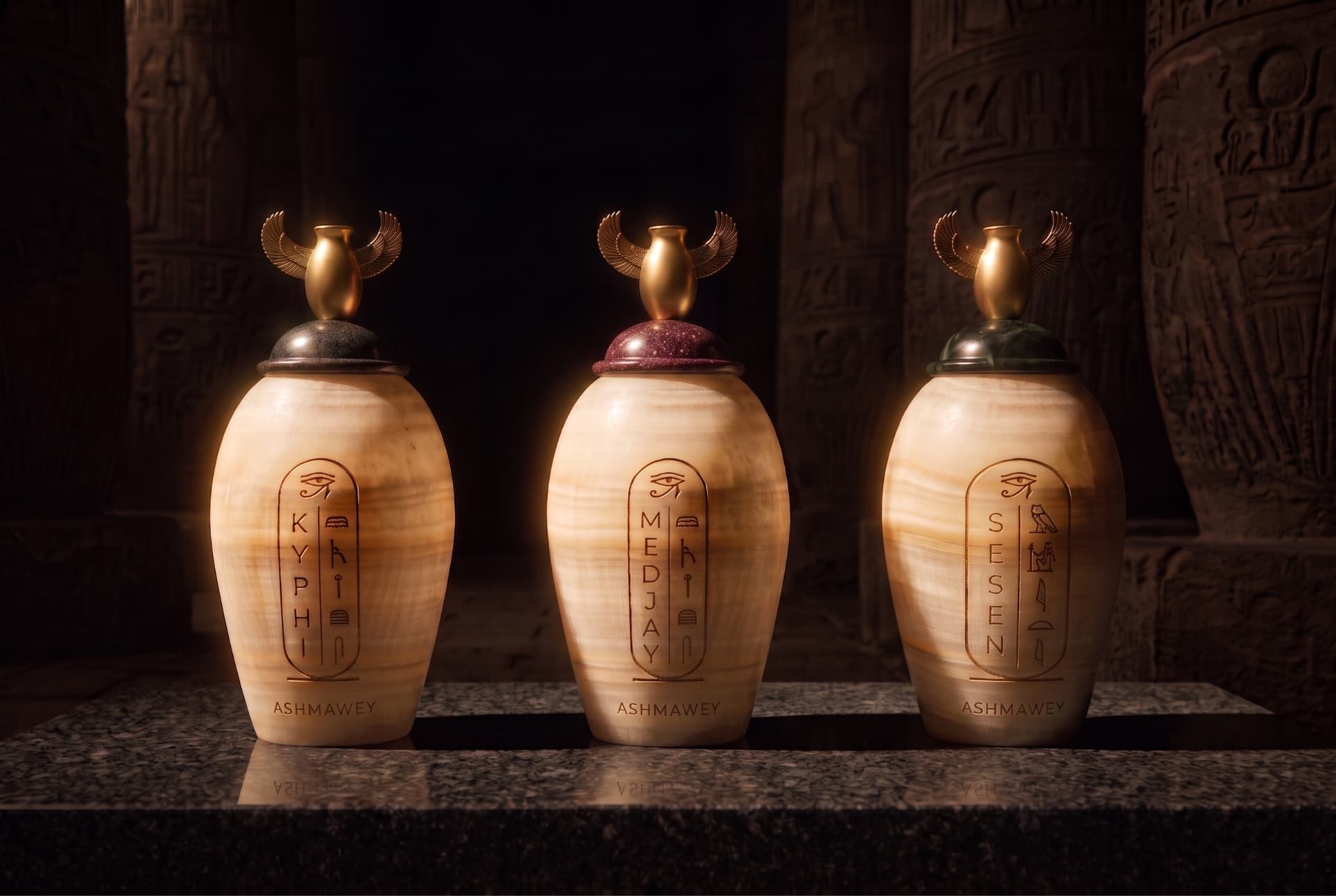
Turned, not moulded.
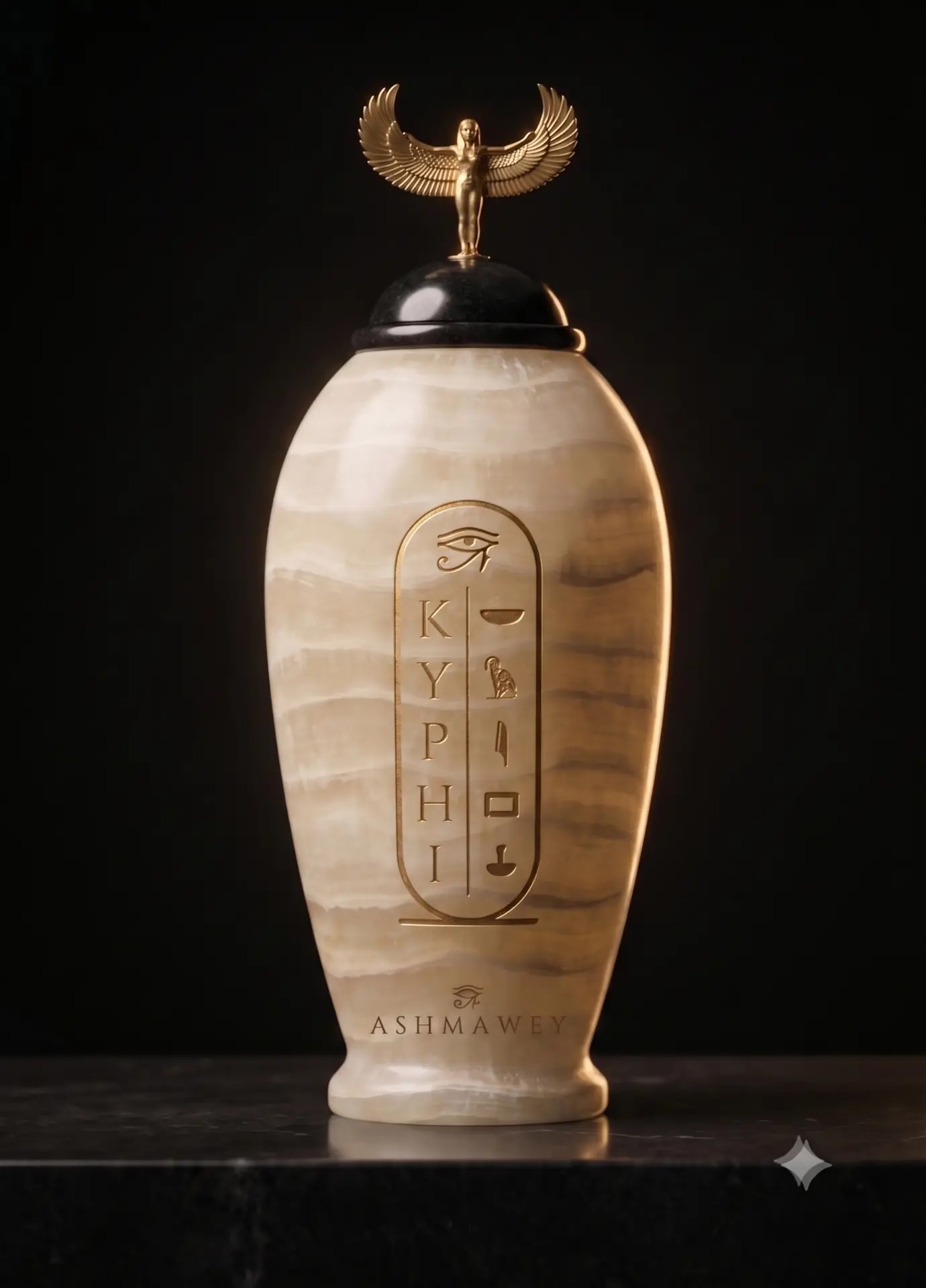
Each flacon is turned by hand from Egyptian alabaster, so no two are identical in figure. The lid is black stone, crowned with a winged figure in gold. The name is cut into the stone as a cartouche — the enclosure the Egyptians reserved for names meant to endure.
The Anointing
Perfume was not worn. It was administered.
In the temples, scent was compounded by priests and kept in a sacred chamber set aside for the purpose. The formula for Kyphi was cut into the walls at Edfu and at Philae so that it could not be lost.
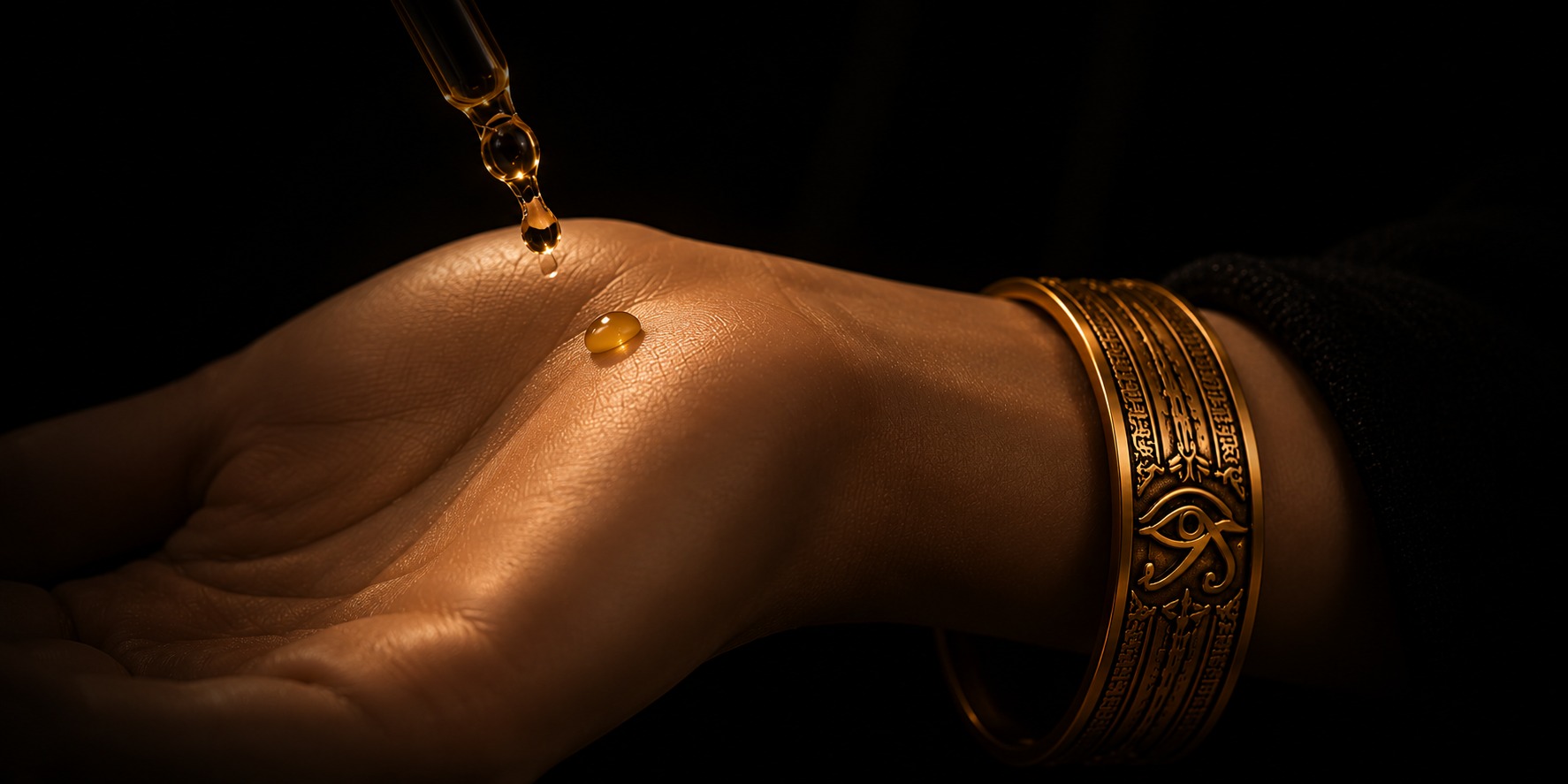
It was applied to the body as rite. Oil to the crown, the neck, the wrists. It marked a person as prepared, as received, as set apart from the ordinary hours of the day.
Somewhere between then and now, scent became a thing you put on before leaving the house.
Ashmawey exists to return it to the ceremony it was meant to be.
THE WEARING
You cannot smell this from the bottle.
At extrait concentration in oil, the vapour is too dense to read. Bring it to your nose and you will get very little. This is not a fault. It is what the concentration does.
The scent resolves on skin. Body heat opens it, and keeps opening it, so what you smell in the first minute is not what you will be wearing in the first hour.
Use the rod. Touch it to the pulse at each wrist, and to the base of the throat if you wish. One or two touches. There is no version of this where more is better.
In our own wear tests it has held beyond forty hours. Skin varies, and yours will not behave exactly as ours did.
A spray is a habit. This is not that.