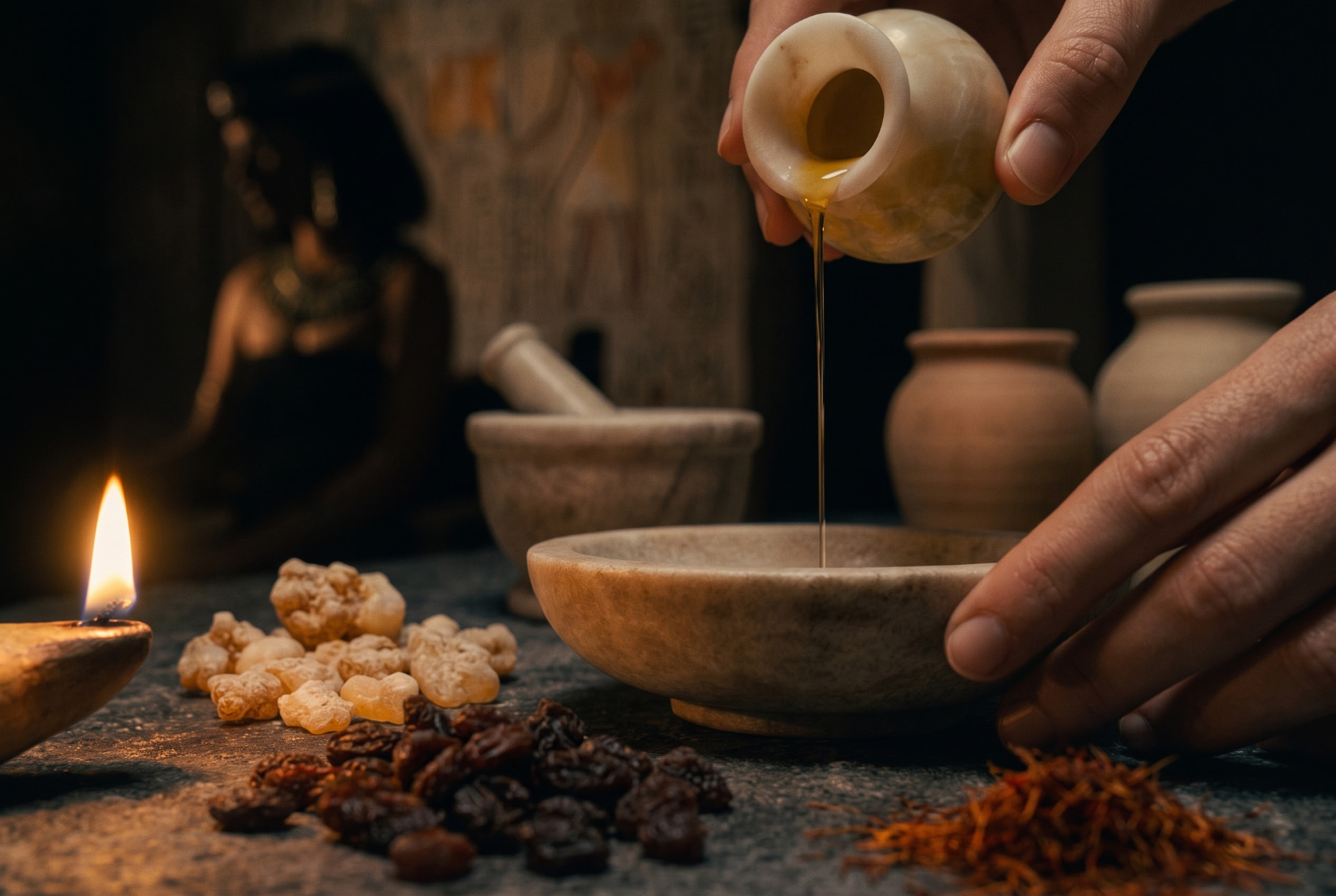
Alexandria, 331 BC.
Alexander founded the city on the Mediterranean coast, and within a generation it became the place where the ancient world traded in scent. Resins came north from Punt. Spices came east from Arabia. What arrived raw in the harbour left the city compounded. Three centuries later Cleopatra ruled from it, and her perfumers worked these same streets.
The quarter where that work was done was called the Attarin. It is still called the Attarin.
THE ATTARIN, ALEXANDRIA
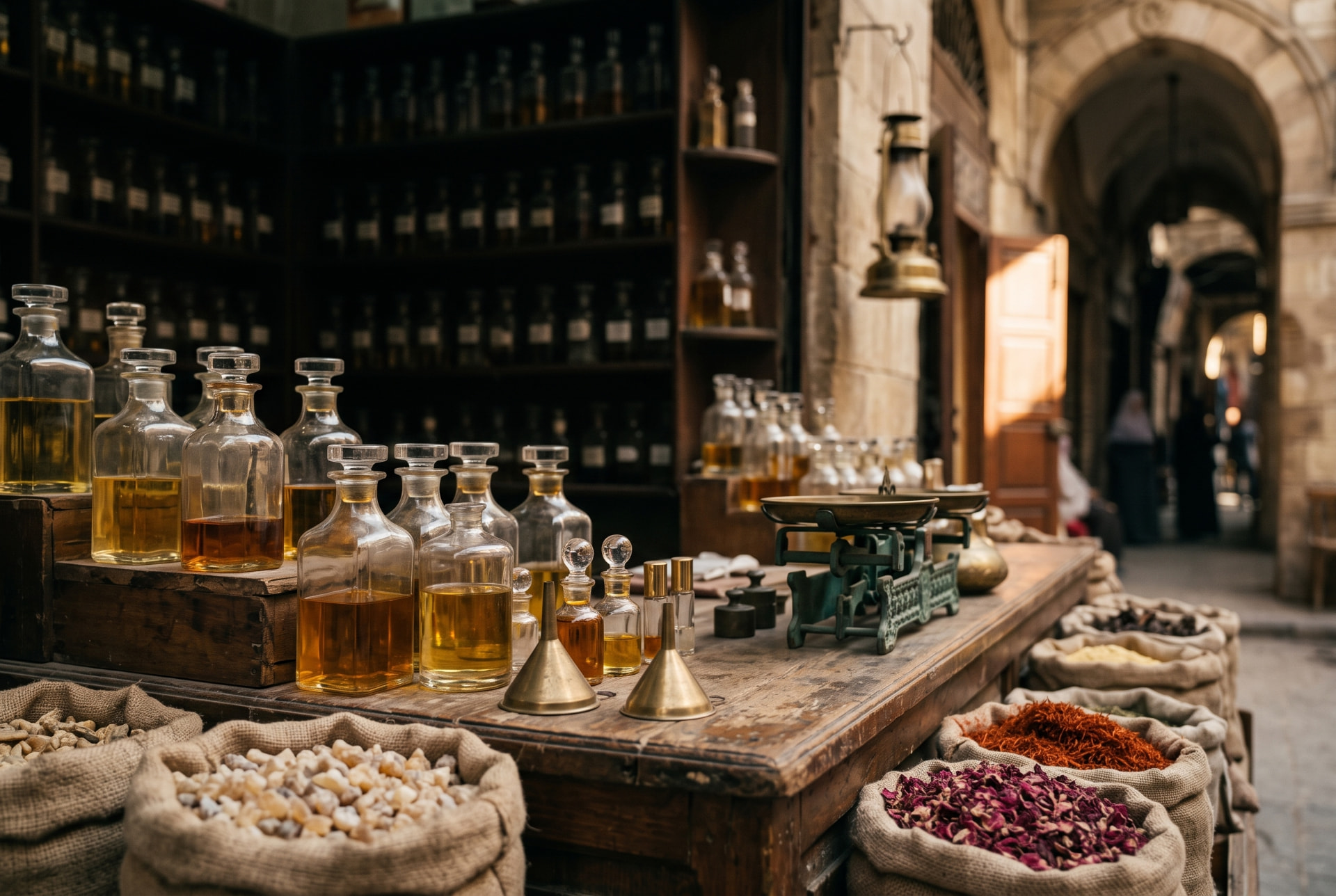
The perfumers stayed.
Empires changed hands above them. The trade did not. Compounding passed by hand, in families, through the Ptolemies and Rome and everything after, never written down, because among people who did it every day it did not need to be.
The Ashmawey trade descends from those who compounded for the Ptolemaic court. There is an Ashmawey counter in the Attarin quarter of Alexandria. It has never closed.
This house is not an homage to Alexandrian perfumery. It is the same work, resumed, composed now for the modern wearer from the same hands and the same street.
This is more than heritage. It is inheritance.
THE ATTARIN, ALEXANDRIA
THE COMPOSITION
The blending is done by the elders.
Kyphi, Sesen and Medjay are composed by the elders of the Ashmawey family. The materials are chosen in the Attarin. The blending is done by hand, one batch at a time.
THE EVIDENCE
We build from evidence.
Kyphi follows the formula cut into the perfume chambers at Edfu and Philae, where the priests recorded materials and proportions in stone. We read those inscriptions as a formula, not as a legend.
Every material is chosen for what it was, not for how it performs.
A return to ceremony.